Understanding lives in the moments when you recognize someone’s journey without judgment, when you create space for their truth before offering your own. Love emerges when you act on that understanding with intention, showing up consistently for your community even when it’s uncomfortable or challenging.
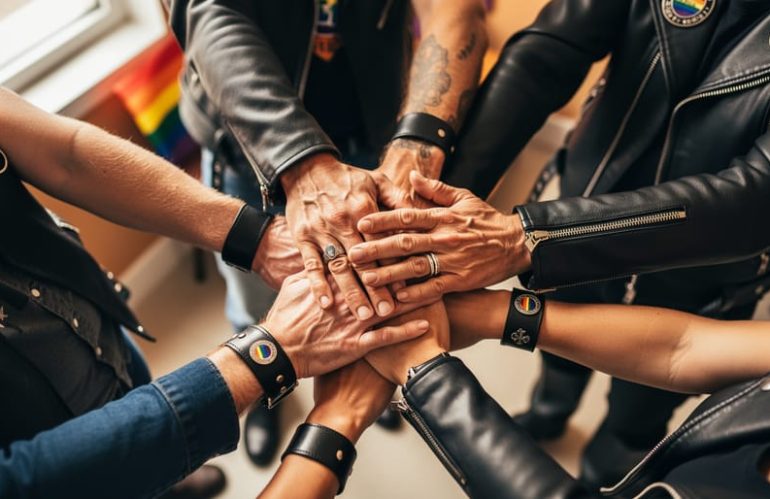
These aren’t abstract concepts in leather culture. They’re the foundation of every negotiation scene, every mentorship relationship, every moment when veterans welcome newcomers into spaces that might otherwise feel intimidating. Understanding means learning the protocols not as rules to enforce but as frameworks for mutual respect. Love means correcting with care when someone stumbles, celebrating their growth, and protecting the vulnerable while honoring everyone’s autonomy.
Practice active witnessing by listening to experiences different from your own without centering yourself in the conversation. Seek out stories from members who hold multiple marginalized identities within our community. When conflict arises, choose curiosity over defensiveness, asking what you might be missing rather than defending what you already believe.
Extend practical support that demonstrates love in action: offer rides to events, share knowledge about safer practices, connect isolated individuals to community resources, and use your privilege to amplify voices that get overlooked. Understanding and love transform from feel-good principles into the lived reality that makes our leather community not just a social scene, but a chosen family where everyone belongs.
What Understanding Really Means in Queer Spaces
Beyond the Stereotypes: Understanding Leather Culture
When many people hear “leather culture,” their minds jump immediately to assumptions—often shaped by limited media portrayals or incomplete information. Perhaps they picture only one type of person, one expression of identity, or focus exclusively on the sexual aspects while missing the profound community connections that define this vibrant subculture. The reality is far richer and more nuanced than these stereotypes suggest.
The leather community has deep historical roots in LGBTQ resistance and resilience. Emerging in the post-World War II era, leather spaces became sanctuaries where queer people could gather authentically, challenging societal norms and creating chosen family. This history carries forward today, with leather culture embodying values like honor, respect, mentorship, and service to community—principles that extend far beyond any single aspect of identity or expression.
Understanding leather culture means recognizing its incredible diversity. This community includes people of all genders, orientations, backgrounds, and experience levels. It welcomes everyone from seasoned practitioners to curious newcomers, from those who embrace traditional protocols to those forging contemporary paths. Some members engage deeply with specific practices and traditions, while others connect primarily through the sense of belonging and acceptance the community offers.
When we move beyond stereotypes, we discover that leather culture is fundamentally about authenticity, connection, and mutual respect. It’s about creating spaces where people can explore who they are without judgment, where mentorship flows freely, and where understanding becomes the foundation for genuine love and acceptance.
By educating ourselves about the history and values that shape leather communities, we become better allies and participants. We learn to appreciate the intentionality behind traditions, the importance of consent and communication, and the beautiful complexity of human expression. This understanding transforms misconceptions into meaningful connections, building truly inclusive spaces where everyone belongs.
The Vulnerability of Being Understood
When we talk about understanding in our community, we’re really talking about trust. True understanding doesn’t happen from a comfortable distance. It requires us to lower our defenses, to share the stories we usually keep guarded, to show the parts of ourselves we’ve learned to protect. This is especially true within the leather community, where we often carry layers of identity that the broader world has taught us to compartmentalize or hide.
Think about the difference between someone who accepts you and someone who understands you. Acceptance can be passive, a shoulder shrug that says “I won’t judge.” But understanding demands active participation. It asks us to explain our desires, our boundaries, our journeys. It asks our partners, friends, and chosen family to lean in and truly listen, not just to the words but to what lives beneath them.
This vulnerability flows both ways. When you open yourself to being understood, you’re also opening yourself to understanding others more deeply. You’re creating space where authenticity becomes the currency of connection. In leather spaces and throughout our community, this exchange of vulnerability is what transforms casual acquaintances into genuine chosen family.
Yes, it’s scary. Being truly seen means someone might witness your fears alongside your strength. But this is where love actually lives, in that brave space between two people willing to be witnessed and to witness in return.
How Understanding Transforms Community Dynamics
When Understanding Meets Intersectionality
Understanding takes on deeper dimensions when we recognize that every person in our community carries multiple identities that shape their experiences. A Black trans leather enthusiast navigates the world differently than a white cisgender one. Someone managing a disability brings unique perspectives that an able-bodied person might never consider. Age, socioeconomic status, immigration background—each layer adds complexity to who we are and how we move through our community spaces.
This intersectionality isn’t just an academic concept. It’s lived reality. When we truly seek to understand one another, we must look beyond single labels. The same practice that feels liberating to one person might trigger trauma in another based on their distinct lived experiences. The event that feels welcoming to some might present barriers—visible or invisible—to others.
Here’s where understanding becomes transformative work. It requires us to listen more than we assume, to ask rather than presume, and to recognize that our own lens is just one of many valid perspectives. Someone experiencing racism within queer spaces needs their reality acknowledged, not dismissed. A person with mobility challenges shouldn’t have to repeatedly explain why inaccessible venues matter. An older community member’s wisdom deserves the same respect we offer emerging voices.
The beauty of our leather community lies in its potential to hold space for all these intersecting identities. When we actively practice understanding across difference, we create something powerful: a culture where complexity is celebrated, where multiple truths can coexist, and where every person’s full self finds belonging. This isn’t always comfortable work, but it’s essential work—the kind that builds authentic love rooted in seeing and honoring one another completely.
Building Understanding: Practical Steps for Our Community
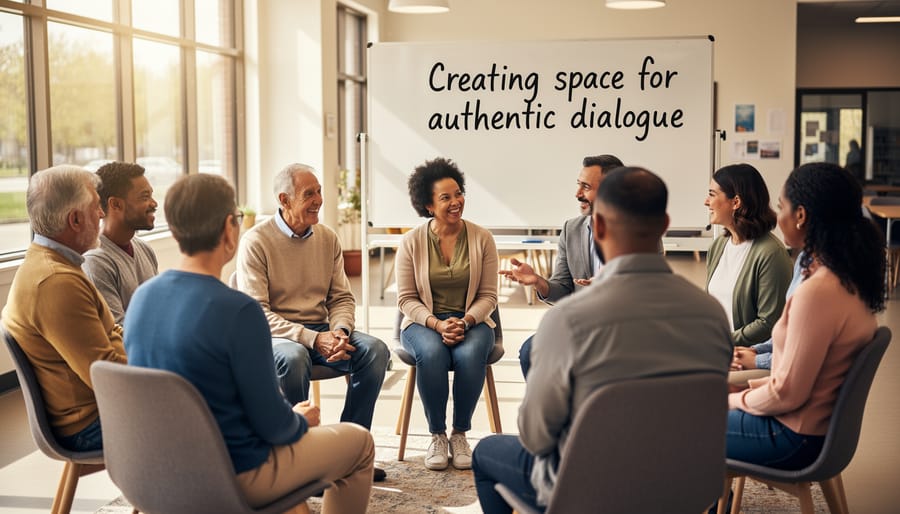
Creating Space for Difficult Conversations
Let’s be real: some of the most meaningful growth happens when we’re willing to sit with discomfort. Creating spaces where difficult conversations can unfold isn’t about walking on eggshells or avoiding hard truths. It’s about building trust so that curiosity thrives alongside accountability.
Start by setting intentions rather than rigid rules. Let people know upfront that the goal is learning, not perfection. When someone asks a question that lands awkwardly, pause before reacting. Consider whether they’re approaching with genuine curiosity or defensiveness. Most people aren’t trying to cause harm; they’re navigating complex identities and histories they may not fully understand yet.
Active listening makes all the difference. This means truly hearing what someone shares about their experience without immediately comparing it to your own or rushing to fix things. Sometimes people just need to be witnessed and validated. Reflect back what you’re hearing: “It sounds like you felt excluded when…” This simple practice shows you’re engaged and creates room for deeper dialogue.
Mistakes will happen, and that’s okay. What matters is how we respond. Encourage people to take responsibility when they misstep, offer genuine apologies, and commit to doing better. Equally important is allowing space for repair and growth rather than demanding instant perfection or writing people off entirely.
Remember that difficult conversations are invitations to deepen understanding. When we approach them with patience, humility, and love, we strengthen the bonds that make our community resilient and transformative.
Where Understanding and Love Intersect
When we talk about building genuine community, understanding and love aren’t just nice ideas to have hanging on the wall. They’re the actual foundation that holds us together, especially in spaces like the leather community where vulnerability and trust run deep.
Think of it this way: love without understanding can become possessive or superficial. We might care deeply about someone but still hurt them because we haven’t taken the time to truly see who they are, what they’ve experienced, or what they need. On the flip side, understanding without love can feel clinical and cold. You might know someone’s story, their pronouns, their boundaries, but if there’s no genuine care behind that knowledge, it rings hollow.
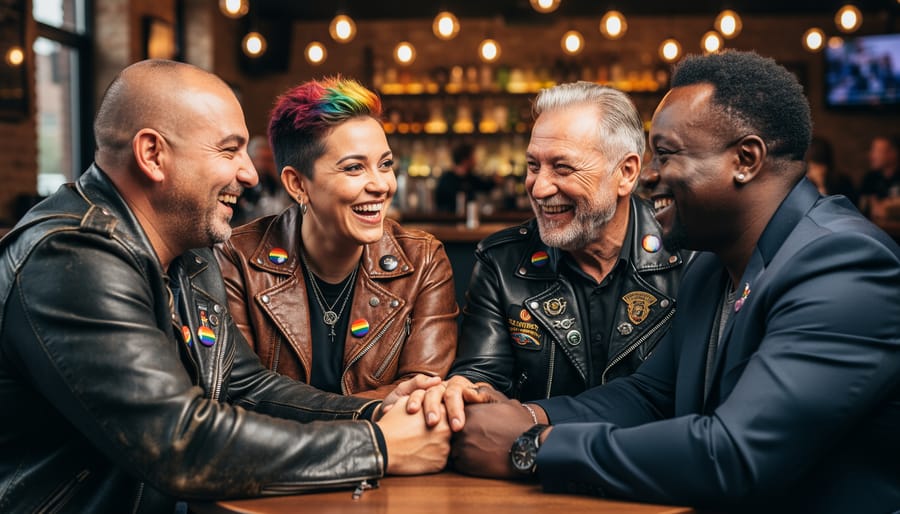
The magic happens at the intersection. When we combine the effort to truly understand each other with genuine care and affection, we create something powerful. This is where authentic support networks are born. In our community, this looks like mentors who not only teach rope techniques or protocol but also take time to understand where someone’s coming from, what fears they’re navigating, what dreams they’re chasing. It’s friends who learn about your identity journey not just to get the terminology right, but because they genuinely want to honor who you are.
This intersection also creates resilience. When challenges arise, whether it’s navigating discrimination, relationship struggles, or personal growth, communities built on both understanding and love don’t fracture easily. We stick together not out of obligation, but because we’ve invested in really knowing each other and genuinely caring about each other’s wellbeing.
The leather community has always understood this intuitively. Our traditions of mentorship, chosen family, and intentional community building all recognize that lasting bonds require both head and heart. We need the wisdom to understand different experiences and identities, paired with the warmth to make everyone feel they belong.

The Ripple Effect: Understanding That Extends Beyond Our Community
When we practice understanding and love within our leather community, we’re not just creating safe spaces for ourselves—we’re building a blueprint for the world around us. Every time we honor someone’s identity, create room for authentic expression, or lead with empathy rather than judgment, we’re demonstrating what genuine inclusion looks like in action.
The leather community has always been at the forefront of challenging societal norms and expanding definitions of acceptance. Our practices of consent, communication, and radical self-expression offer powerful lessons for mainstream society. When we negotiate scenes with clarity and respect, we model how consent should work in all relationships. When we create spaces where people can explore their authentic selves without shame, we show what true acceptance means.
This ripple effect extends through our allies, who witness and participate in our community values. These aren’t people who simply tolerate us from a distance—they’re individuals who genuinely comprehend the beauty of our diversity because they’ve experienced our culture of understanding firsthand. They carry these lessons into their workplaces, families, and social circles, gradually transforming what society considers normal and acceptable.
Consider how our commitment to understanding different kinks, identities, and expressions within the leather world translates to broader conversations about human dignity and respect. When we explain to curious outsiders why we value communication protocols or honor diverse presentations of gender and desire, we’re teaching the world that difference doesn’t threaten community—it enriches it.
The understanding we cultivate here becomes a gift we offer to everyone. It proves that love and acceptance aren’t finite resources to be rationed, butExpandableCapacities that grow stronger with practice and intention.
Understanding isn’t a finish line we cross—it’s a path we walk together, every single day. In our community, where authenticity and connection matter deeply, choosing understanding over assumptions becomes an act of radical love. It’s how we honor each other’s journeys, celebrate our differences, and build the kind of spaces where everyone can show up fully as themselves.
This commitment doesn’t demand perfection. We’ll stumble, misunderstand, and need to course-correct. What matters is that we keep showing up with open hearts and curious minds, ready to learn from one another. Whether you’re deeply rooted in the leather community or just beginning to explore these spaces, your willingness to understand—to really see and hear your siblings—strengthens all of us.
Our community grows most vibrant when we replace judgment with curiosity, when we ask questions instead of making assumptions, and when we extend the same grace to others that we hope to receive ourselves. This is the foundation of genuine support: understanding practiced daily, love demonstrated through action, and connection nurtured intentionally. As you move forward, carry this commitment with you. Let understanding guide your interactions, your relationships, and your presence in our shared spaces. Together, we create something beautiful.