
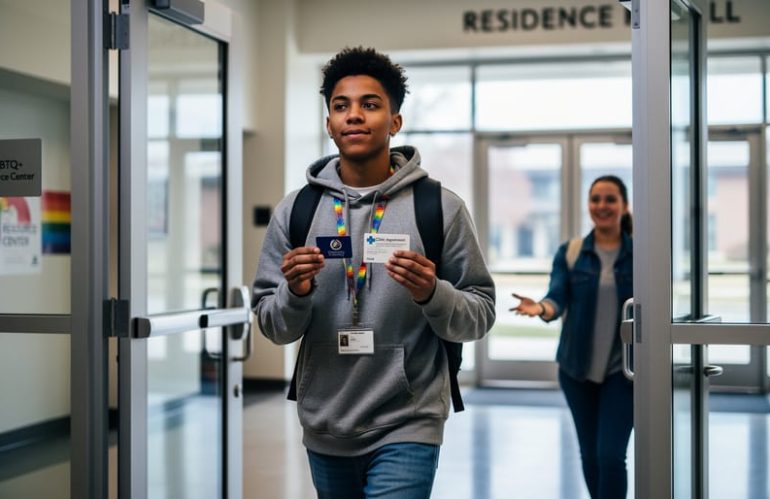
Freshman transition for LGBTQ students, particularly those who are trans or gender-diverse, succeeds when you secure three essentials before classes begin: continuity of gender-affirming healthcare, campus housing that respects your identity, and connection to queer community spaces that understand your specific needs. This preparation matters because the first semester sets the trajectory for your entire college experience, and proactive planning prevents the isolation and healthcare gaps that derail too many students during this vulnerable period.
College represents a powerful opportunity to live authentically, often for the first time. You’re stepping into environments where chosen names and pronouns can become standard, where student health centers may offer hormone therapy and transition support and where LGBTQ resource centers provide both practical assistance and affirming community. The difference between thriving and merely surviving freshman year comes down to knowing what resources exist and claiming them without apology.
The challenges are real. Navigating roommate assignments, updating legal documents across campus systems, finding competent healthcare providers in a new city, and building chosen family while managing academic pressure requires strategic thinking. Trans students face additional layers: insurance complications when crossing state or provincial lines, the emotional labor of educating peers and professors, and the constant calculation of safety in new spaces.
But here’s what the statistics and countless student experiences confirm: trans and gender-diverse freshmen who connect early with campus LGBTQ centers, establish healthcare continuity within the first month, and find at least one peer affinity group report significantly higher satisfaction and retention rates. Your transition, your timeline, your identity are yours alone. The goal isn’t to have everything figured out. It’s to build the support infrastructure that lets you explore, grow, and celebrate who you’re becoming.
What Makes Freshman Transition Different for Trans and Gender-Diverse Students
Starting college can feel like stepping into a completely new world for anyone, but trans, non-binary, and gender-diverse students often face an entirely distinct set of considerations that shape every aspect of the freshman experience. While your classmates might worry about finding their dorm room or choosing a major, you’re also navigating questions about whether your chosen name will appear on class rosters, if bathrooms will be safe and accessible, and whether you’ll need to explain your identity before you’ve even unpacked.
The freshman transition intersects with identity development in ways that cisgender students rarely encounter. You might be coming out publicly for the first time, or you might be seeking spaces where you can finally live authentically after years of carefully managing how visible your identity could be at home. Some students arrive mid-transition, managing medical appointments and hormone refills in an unfamiliar city while also building confidence in new academic environments. Others are just beginning to explore their gender identity, finding language and community that finally makes sense of feelings they’ve carried for years.
Research shows that trans and gender-diverse students face additional hurdles in university settings, from microaggressions in the classroom to administrative systems that weren’t designed with diverse gender identities in mind. You might need to advocate for yourself before you’ve even figured out the campus map, explaining to a professor why the name on the roster doesn’t match who you are or requesting access to facilities that respect your identity.
The concept of chosen family takes on particular weight during freshman transition. Unlike high school, where you might have been surrounded by people who’ve known you since childhood, college offers the chance to craft relationships from scratch with people who see you as you truly are. This can be liberating and terrifying in equal measure, especially when you’re also managing the logistics of new classes, living independently, and figuring out who you want to become.
For those balancing academic transition with medical transition, the coordination can feel overwhelming. Scheduling appointments around class times, finding affirming healthcare providers in a new city, managing insurance changes, and maintaining consistent access to hormones or other gender-affirming care requires planning and resources that many eighteen-year-olds haven’t had to develop yet. The freshman experience becomes layered with adult responsibilities that go far beyond what orientation week prepares you for.
Building Your Support Network from Day One
On-Campus Resources
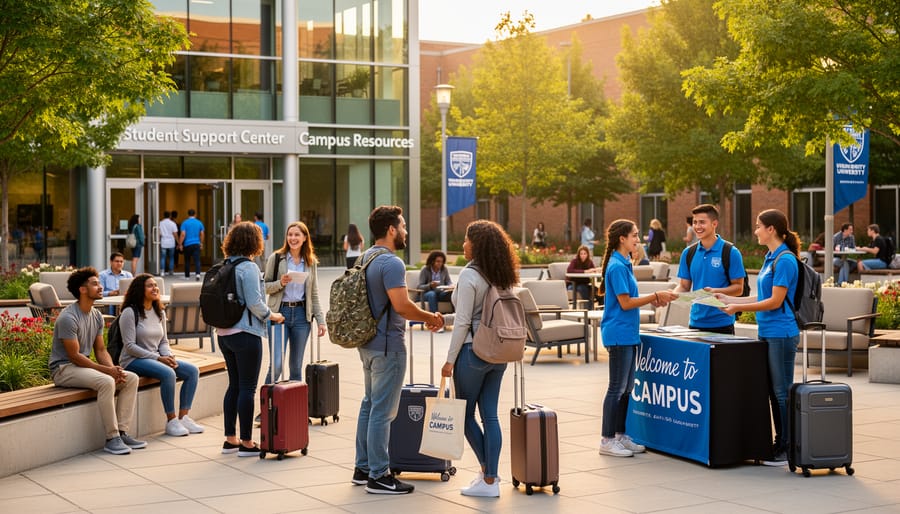
Most colleges offer resources specifically designed to support trans and gender-diverse students, though you’ll need to do some investigating to find them all. Start with your campus LGBTQ resource center, often called a Gender and Sexuality Center or Rainbow Center, where staff understand the unique challenges you’re facing and can connect you with peer support groups, counseling, and advocacy assistance. Many centers host regular social events, discussion groups, and workshops that help you meet other queer students navigating similar experiences.
Housing options matter more than you might think. Request gender-inclusive or gender-neutral housing if your campus offers it, which allows you to room with people of any gender in a space that affirms your identity rather than forcing you into binary dorms. Some schools also provide single rooms for students who need them for safety or comfort reasons.
Your campus likely has a preferred name and identity policy that lets you use your chosen name on class rosters, ID cards, and email systems even before legal name changes. Push for this from day one, it shapes how professors and classmates know you and reduces the burden of constant corrections.
Student organizations extend beyond general LGBTQ groups. Look for trans-specific support groups, queer people of color collectives, and affinity groups that match your intersecting identities. These communities often provide the compassionate care and understanding that helps you thrive rather than just survive your freshman year.
Community Connections Beyond Campus
While campus resources provide essential immediate support, the broader LGBTQ community beyond your college gates offers something equally vital: intergenerational connection, diverse perspectives, and spaces where your identity isn’t defined by student status alone. These off-campus communities become part of your chosen family and often provide the kind of deep, lasting support that survives graduation and life transitions.
Start by exploring local LGBTQ community centers, which typically offer social groups, support meetings, and events specifically for young adults. Many cities have dedicated trans and non-binary social groups where you can meet people navigating similar journeys at different life stages. Unlike campus groups that turn over every few years, these communities include people who’ve been out for decades alongside those just beginning their transitions, creating rich opportunities to learn from lived experience.
Don’t overlook specialized communities that align with your interests. Leather and kink communities, for instance, have long histories of welcoming gender-diverse members and often champion consent, communication, and radical self-expression in ways that can feel profoundly affirming. Events like local pride celebrations, leather pride weekends, and community fundraisers offer low-pressure ways to observe these spaces before deciding if they resonate with you.
Community health centers serving LGBTQ populations provide more than medical care, they’re often hubs for support groups, workshops, and social connections. Staff at these centers can point you toward affirming providers, mental health resources, and social opportunities you might not discover on your own.
Building community beyond campus means you’re never solely dependent on one institution for belonging. You’re creating a web of support that reflects the full complexity of who you are, not just your identity as a student.
Navigating Healthcare Access During Transition Periods

Starting college while navigating gender-affirming care requires careful planning, but you don’t have to figure it out alone. Before you arrive on campus, research what healthcare services your college offers and whether they include gender-affirming care, hormone therapy management, or knowledgeable providers who work with trans patients. Many campus health centers have made significant strides, but coverage and expertise vary widely between institutions.
If you’re already receiving hormone therapy or other gender-affirming treatments, establish a plan for continuity before you move. Connect with your current provider about options: some patients continue telehealth appointments with their home providers, while others transfer care to practitioners near campus. Ask about prescription transfers, medical records you’ll need, and what monitoring appointments are essential during your first semester. Don’t wait until you’ve run out of medication to sort this out.
Comprehensive programs like the Transition Program at Women’s College Hospital in Toronto serve as models for what affirming care should look like. These programs offer integrated support including medical transition services, mental health care, peer support, and navigation assistance, all under one roof with providers who specialize in trans health. While not every city has a program this extensive, you can find similar quality care by seeking community health centers with LGBTQ specialization, Planned Parenthood locations that offer gender-affirming care, or private providers with strong reputations in the trans community.
Mental health support deserves equal attention. Starting college brings stress for everyone, and managing that alongside gender identity exploration or transition adds another layer. Look for therapists who specialize in gender identity, but also recognize that you might need support for depression, anxiety, or general adjustment that isn’t solely focused on being trans. You’re a whole person.
If your college’s insurance coverage falls short or excludes trans-specific care, research state healthcare programs, sliding-scale clinics, and mutual aid networks in your area. Some students maintain coverage under their parents’ insurance, while others qualify for expanded Medicaid coverage or student health plans with better trans-inclusive benefits. The administrative work feels overwhelming, but securing your healthcare access protects your wellbeing and lets you focus on thriving, not just surviving, your freshman year.
Creating Safety and Authenticity in New Spaces
Creating safety as a trans or gender-diverse freshman means recognizing that you hold the power over your own story. You decide who gets to know what, when, and how much. There’s no universal rulebook for disclosure, and you don’t owe anyone an explanation about your identity, your body, or your transition journey.
Start by identifying your non-negotiables. What do you absolutely need to feel safe and authentic in classroom spaces, residence halls, and social settings? This might include professors using your correct name and pronouns, access to appropriate facilities, or simply having your identity respected without constant questioning. With the right support you can communicate these needs effectively while protecting your emotional energy.
When you choose to educate others, set clear limits on your availability for this labor. You might prepare a simple, rehearsed response for common questions that establishes boundaries without detailed explanations. Some students find it helpful to email professors before the semester starts regarding name and pronoun usage, while others prefer to address issues as they arise. Both approaches are valid.
Faculty and peer education works best when you’re in the right headspace and feel safe. You’re not responsible for teaching everyone around you about trans identities, and it’s perfectly acceptable to direct people to existing resources rather than becoming an unpaid educator. Many campuses have LGBTQ centers that can provide training for faculty or intervene when needed.
Your level of visibility is your choice and can shift depending on context. Being out in your queer student group doesn’t obligate you to be equally visible in your biology lecture. You might be open about some aspects of your identity while keeping others private. This isn’t dishonesty; it’s intelligent navigation of complex social environments.
Authenticity doesn’t require constant disclosure or vulnerability. Sometimes the most authentic thing you can do is protect your peace, limit access to your personal life, and save your full self for spaces and people who’ve earned that trust. You deserve respect in every environment, whether people know your full story or not.
Celebrating Your Journey and Finding Joy
Starting college as a trans or gender-diverse student is not just about overcoming obstacles. It is fundamentally about claiming space for yourself and discovering what brings you genuine joy. This period offers a rare chance to step into who you truly are, surrounded by new people who can know you as your authentic self from the very beginning.
The reinvention possible during your freshman year can be liberating. You get to choose how you present yourself, which aspects of your identity you share and when, and what communities feel like home. This is your opportunity to explore interests you may have set aside, try on different expressions of your gender, and build relationships based on mutual respect and understanding rather than outdated assumptions.
Finding your chosen family often happens organically during this time. The friends you make in queer student groups, the upperclassmen who mentor you through their own experiences, the professors who use your correct name without being asked, these connections become the foundation of a support system that celebrates who you are. Many students discover that the bonds formed during freshman transition run deeper than friendships based solely on proximity or shared classes.
The spirit of community celebration that defines events like Toronto Leather Pride reflects a broader truth: queer joy is an act of resistance and affirmation. Your transition, whether social, medical, or simply the transition into college life, deserves to be honored. Celebrate small victories: the first time someone uses your pronouns correctly without correction, finding a bathroom where you feel safe, wearing an outfit that makes you feel completely yourself.
Growth and thriving are not incompatible with struggle. Your freshman transition is both, and that complexity deserves recognition and joy.